
The Midlife Body Mystery, Solved
Let's talk about that moment when you look in the mirror and think, "Who moved my metabolism?" If you're in your 40s or early 50s and suddenly noticing changes in your body that diet and cardio just aren't fixing, you're not imagining things. Your body is changing—but not in the way most women have been led to believe.
Here's the real deal: during perimenopause (those years leading up to menopause), your body undergoes a metabolic shift that has less to do with "slowing down" and more to do with muscle. Research shows that women can lose up to 3-5% of muscle mass per decade after 30—and this loss accelerates during perimenopause when estrogen begins to decline.
The good news? This isn't inevitable. The solution just might not be what you expected.
Enter strength training—the intervention that's revolutionizing how women experience midlife body changes.
Why Now? The Perimenopause Fitness Revolution
For decades, women approaching midlife were handed the same tired advice: "Just walk more and eat less." Meanwhile, the fitness industry's messaging targeted younger women with promises of "toning" (whatever that means) rather than building real strength.
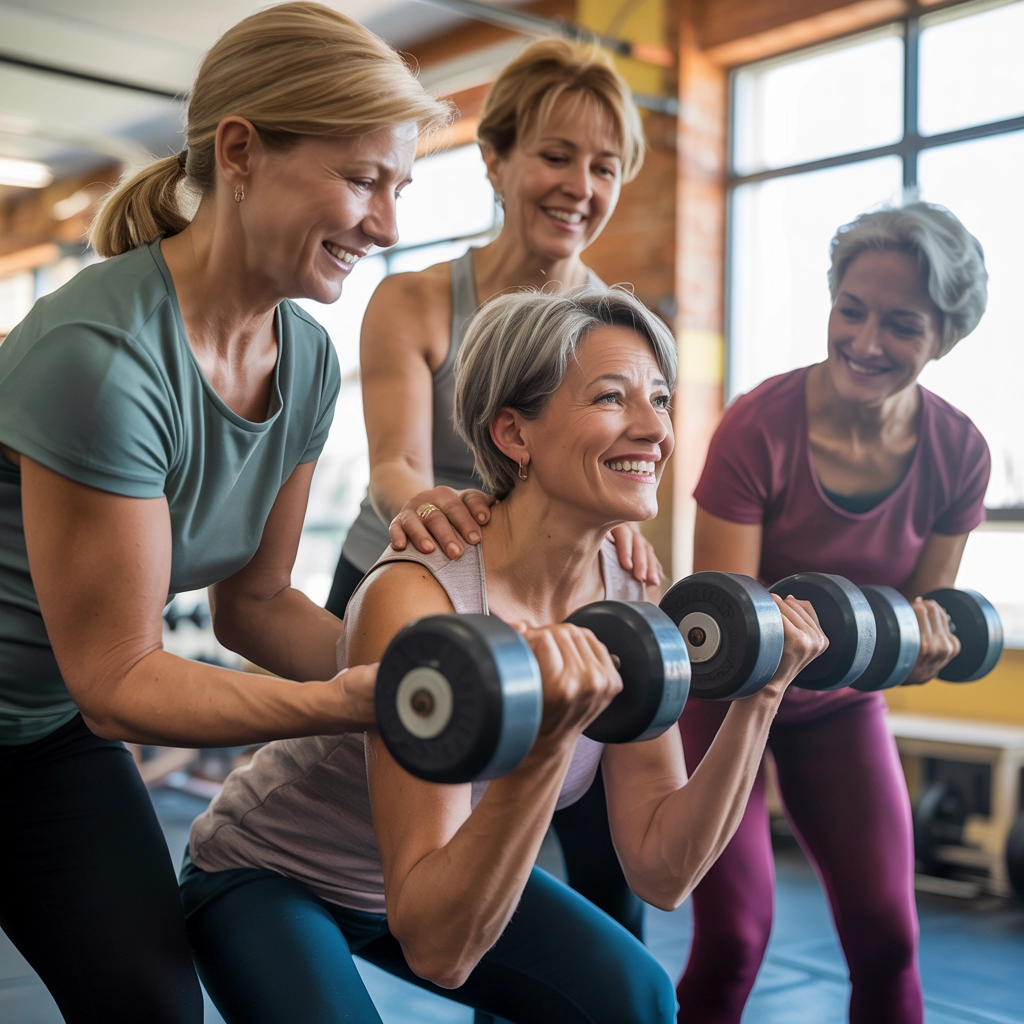
But a revolution is happening. More women in their 40s, 50s, and beyond are discovering that lifting progressively heavier weights is the most effective strategy for combating the very real physiological changes of perimenopause.
"I spent years fighting a losing battle with my changing body until I discovered strength training at 47," says Maria Chen, a 52-year-old software engineer. "Within six months of consistent lifting, I had more energy, better sleep, and my body shape changed completely—even though the scale barely moved."
This isn't just anecdotal. Science backs up what these pioneering women are experiencing.
The Science: Why Your Perimenopausal Body Craves Strength Training
The benefits of strength training during perimenopause are so profound that many women report feeling better than they did in their 30s. Here's why lifting weights works magic during this transition:
1. The Bone-Builder Effect
Estrogen is your bones' best friend, helping maintain bone density throughout your reproductive years. When estrogen declines, bone density can drop rapidly, increasing fracture risk.
Strength training creates the perfect counteraction: When you lift weights, you put beneficial stress on your bones, signaling them to rebuild stronger. Studies show that progressive resistance training can increase bone mineral density by 1-3% per year—effectively canceling out perimenopausal bone loss.
2. Metabolic Makeover
That stubborn belly fat that suddenly appears during perimenopause? It's largely due to hormonal changes affecting where your body stores fat and how efficiently it burns calories.
Strength training addresses this on multiple fronts:
- It preserves and builds muscle mass, which burns more calories at rest
- It improves insulin sensitivity, reducing fat storage
- It creates an "afterburn effect," increasing metabolism for up to 72 hours after your workout
Research published in the Journal of Obesity found that women who incorporated weight training lost significantly more visceral fat (the dangerous kind around organs) than those doing cardio alone.
3. The Mood & Mind Connection
Up to 70% of women report mood changes during perimenopause. The hormone fluctuations can affect everything from sleep quality to stress levels.
Strength training produces a reliable surge of feel-good endorphins while reducing cortisol (stress hormone) levels over time. Even more impressively, resistance training has been shown to improve cognitive function and may help prevent age-related cognitive decline.
Dr. Lisa Thompson, endocrinologist and women's health specialist, explains: "The cognitive benefits of strength training during perimenopause may be related to improved blood flow to the brain, reduced inflammation, and the release of brain-derived neurotrophic factor (BDNF), which supports neural health."
4. Joint Pain Relief
Contrary to outdated beliefs that lifting weights damages joints, proper strength training actually reduces joint pain and stiffness by:
- Strengthening the muscles that support your joints
- Improving mobility and flexibility
- Reducing systemic inflammation
This is particularly important during perimenopause when fluctuating hormones can increase inflammation and joint discomfort.

Breaking Through the Myths
Despite the overwhelming evidence supporting strength training for perimenopausal women, persistent myths continue to keep many from experiencing these benefits:
Myth #1: "Lifting weights will make me bulky."
Reality: Women have significantly less testosterone than men, making it extremely difficult to build bulky muscles. What you will develop is a stronger, more defined physique with improved posture and functional strength.
Myth #2: "Cardio is better for weight loss."
Reality: While cardio burns calories during the activity, strength training continues burning calories for days afterward. More importantly, it preserves the muscle mass that keeps your metabolism running efficiently.
Myth #3: "I'm too old to start lifting weights."
Reality: Studies have shown remarkable strength gains in women who begin resistance training in their 70s and 80s. Your body maintains the ability to build muscle throughout life—it's never too late to start.
Myth #4: "I need to get in shape before I start strength training."
Reality: Strength training IS how you get in shape. Every fitness level can be accommodated with appropriate modifications and progressions.
Getting Started: Your Perimenopause Strength Plan
If you're convinced but unsure where to begin, here's a simple framework to get started:
Step 1: Focus on the Fundamentals
Start with compound movements that work multiple muscle groups:
- Squats (with or without weights)
- Modified push-ups (against a wall or counter if needed)
- Dumbbell rows
- Glute bridges
- Assisted lunges
Aim for 2-3 sets of 8-12 repetitions, choosing a weight that feels challenging for the last few reps.
Step 2: Progressive Overload
The key to results is gradually increasing the challenge. This can mean:
- Adding small weight increments (even 1-2 pounds matters!)
- Increasing repetitions
- Slowing down the movement
- Adding sets
Remember: If it doesn't challenge you, it won't change you.
Step 3: Consistency and Recovery
- Aim for 2-3 strength sessions per week with rest days between
- Prioritize protein intake (aim for 25-30g per meal)
- Ensure adequate sleep for recovery
- Consider working with a qualified trainer initially to learn proper form
"The most important factor is consistency," says Sarah Johnson, strength coach specializing in midlife women. "Two well-executed sessions per week will transform your body over six months. It's not about perfection—it's about showing up for yourself regularly."

Beyond the Physical: The Empowerment Factor
Perhaps the most revolutionary aspect of strength training during perimenopause isn't physical at all—it's psychological.
"When you discover you can lift more weight than you ever thought possible, it changes how you see yourself," explains Dr. Katherine Reynolds, psychologist specializing in women's transitions. "That confidence transfers to every area of life."
This sentiment echoes across social media, where women are increasingly sharing their midlife strength journeys. Hashtags like #MenopauseStrong and #LiftHeavyAging are creating communities of women celebrating their strength rather than mourning perceived losses.
Making the Commitment: Your Next Steps
If you're ready to join the perimenopause strength revolution, here's your action plan:
-
Start where you are. Even bodyweight exercises like wall push-ups and chair squats build foundation strength.
-
Consider expert guidance. Many trainers now specialize in perimenopausal fitness. Even a few sessions can teach proper form and create a personalized plan.
-
Track your progress. Keep a simple log of weights, reps, and how you feel. Strength improvements happen quickly and provide powerful motivation.
-
Connect with a community. Whether in-person or online, finding other women on similar journeys provides accountability and inspiration.
-
Be patient with your body. Approach this as a lifelong practice rather than a quick fix. Consistency trumps intensity every time.
Remember: Perimenopause isn't about managing decline—it's about discovering new strengths. Your body is changing, yes, but with the right approach, these can be some of your strongest, most vibrant years yet.
Ready to transform how you experience perimenopause? Your strongest self is waiting. All you need to do is pick up those weights.
Looking for more personalized guidance on navigating perimenopause? Visit our comprehensive resource library for expert-led classes and community support.