
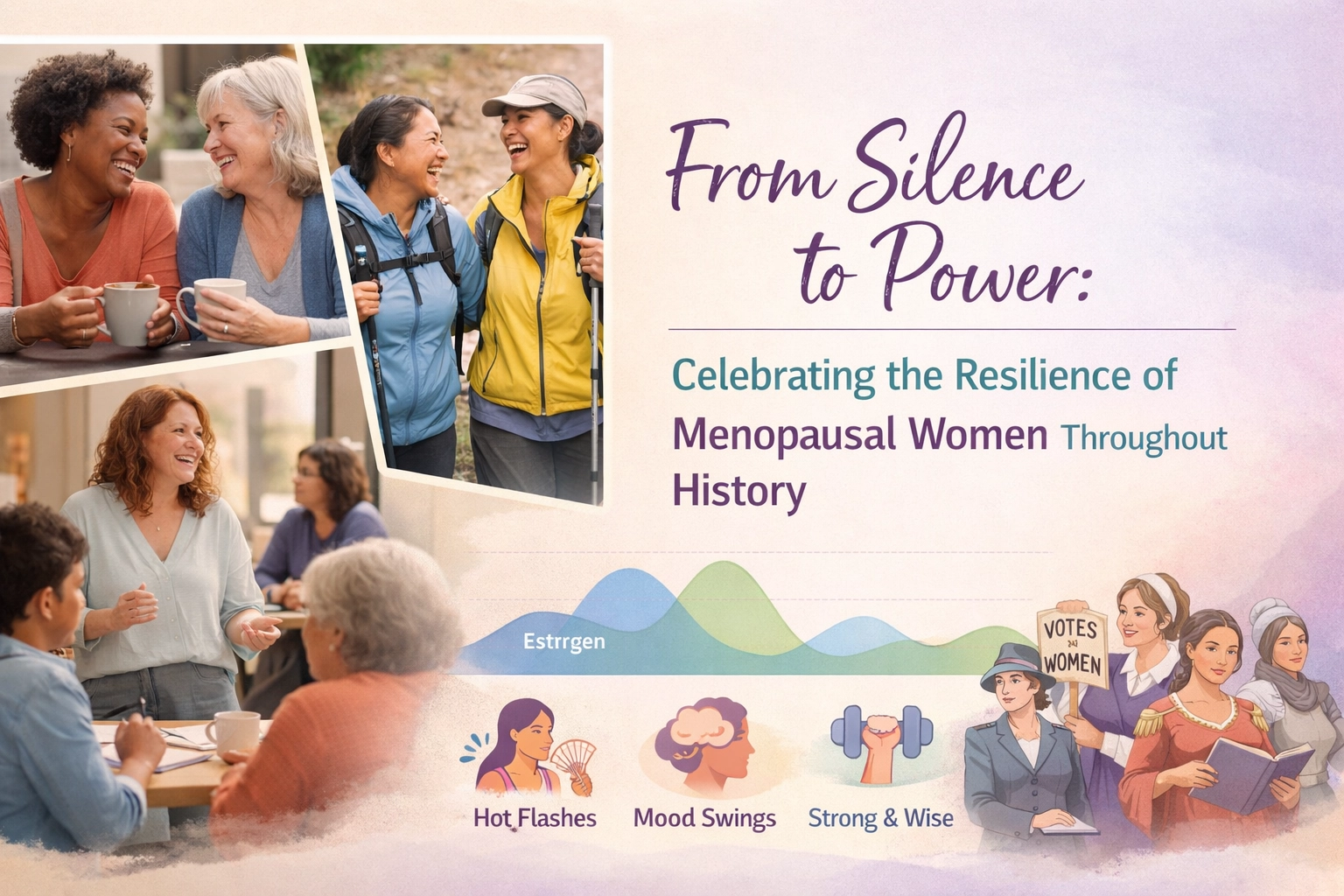
March is Women’s History Month: a time to celebrate the pioneers, the rule-breakers, and the women who paved the way for the freedoms we enjoy today. But when we look back at history, there is a massive, gaping hole in the narrative. We hear about the queens, the suffragettes, and the scientists, but we rarely hear about the millions of women who navigated one of the most significant biological transitions of their lives in total, crushing silence.
For centuries, menopause wasn’t just a "hushed topic"; it was a source of shame, medical misunderstanding, and social erasure. Yet, despite the stigma, women have always found ways to be resilient. Today, we aren't just breaking the silence: we’re flipping the script entirely. We are moving from a history of "enduring" to a future of "empowering."
At the Menopause Education Center, we believe that understanding where we’ve been is the key to reclaiming where we’re going. Let’s take a look at the resilience of the women who came before us and how we are finally turning menopause into a position of power.
The Era of Blame: When Menopause Was a "Moral Failing"
In the early modern era, menopause wasn't viewed through the lens of biology: it was viewed through the lens of morality. If a woman had a difficult transition, it wasn’t because her hormones were shifting; it was because of her "youthful indiscretions."
According to historical research, physicians in early modern Europe often blamed women for their menopausal symptoms. If you had hot flashes or mood swings, it was attributed to eating spicy foods, drinking too much coffee, reading novels, or: believe it or not: masturbation [4]. In a patriarchal society, a woman’s identity was tied almost exclusively to her fertility. Once that fertility ended, she was often seen as a threat or a "spent" resource, especially if she dared to remain sexually active or independent.
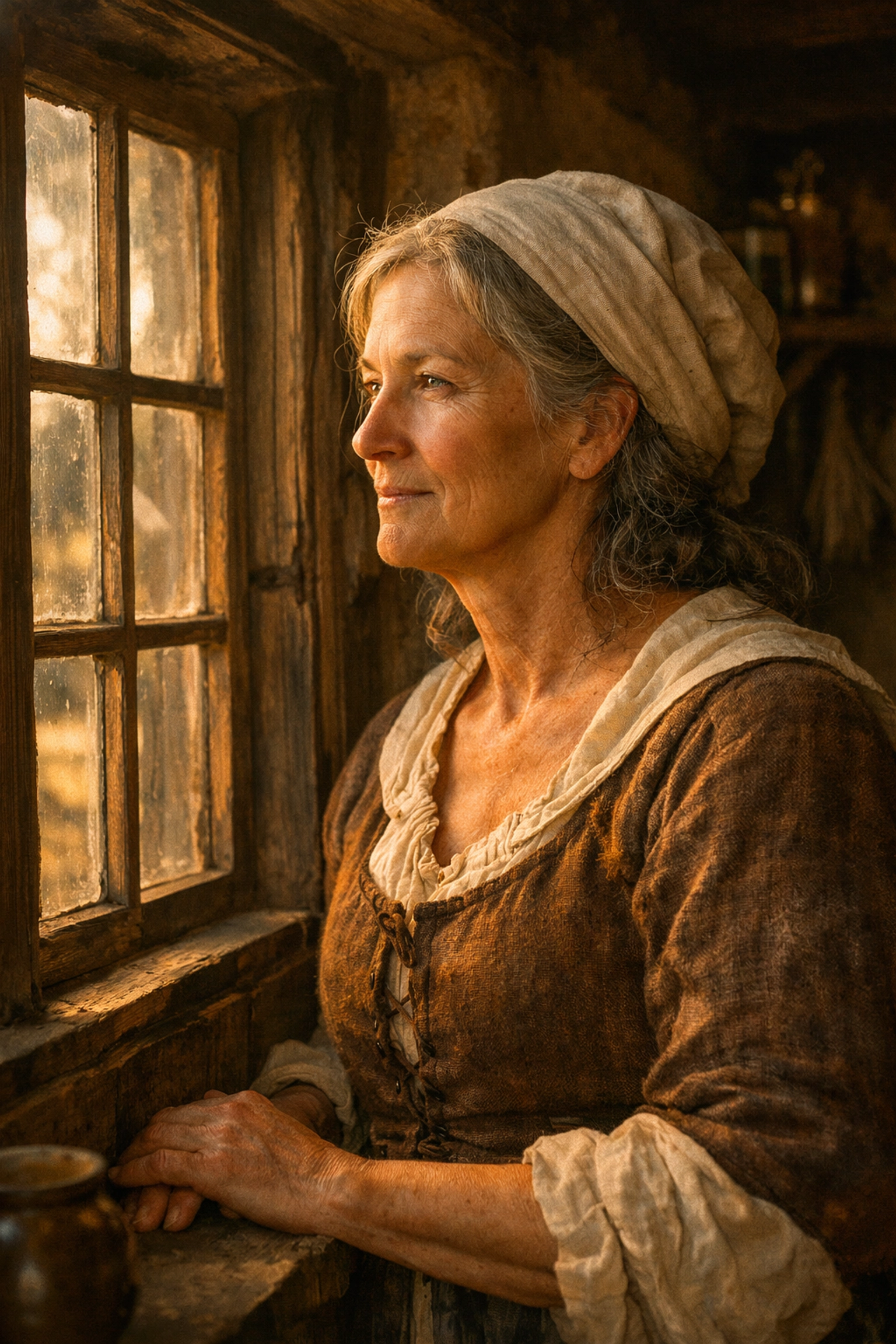
Imagine navigating night sweats and anxiety while being told it was your own fault for enjoying a cup of coffee or a good book. That is the definition of resilience. Women didn't just give up; they survived a system that was designed to make them feel invisible.
The Secret Language of "Wise Women"
While the male-dominated medical field was busy pathologizing the female body, women were doing what they’ve always done: taking care of each other.
History shows us that women developed their own complex systems of healing long before "menopause" was a household word. By the 19th and 20th centuries, traditional healers: often referred to as "wise women": were using herbal remedies like Passiflora incarnata and Valeriana officinalis to manage symptoms [4].
These women were the original community support networks. They served as counselors and mentors, valuing life experience over social stigma. They recognized what the "Grandmother Hypothesis" eventually suggested: that women who survive past their reproductive years are evolutionary powerhouses, essential for the survival and education of the next generation [3].
This transition from being a mother to being a "holder of wisdom" is a narrative we are reclaiming today. We aren't "losing" our value when we stop menstruating; we are stepping into a different kind of authority.
The Science of Resilience: Why You’re Stronger Than You Think
We often talk about menopause as a series of symptoms to be "fixed." But modern research is beginning to look at it differently: as a test of resilience that actually makes us stronger.
Recent studies have shown that resilience in women is strongly linked to mental health during perimenopause [1]. Women who cultivate optimism, emotional stability, and self-compassion actually report milder symptoms and greater life satisfaction. This isn’t just "positive thinking"; it’s a biological and psychological superpower.
Think of it this way: Menopause is a major life transition, much like puberty, but in reverse. It’s a total body recalibration. The resilience we build during this time: the "bounce-back" factor: carries us through the second half of our lives with a newfound sense of self.
From Hushed Tones to High Power: The Workplace Revolution
One of the biggest shifts in the history of menopause is happening right now in the workplace. For decades, the mere mention of a "hot flash" in a board meeting was enough to end a career or invite ridicule. Women were forced to hide their fans, their brain fog, and their discomfort to maintain a "professional" image.
But the silence is finally breaking. We are seeing a global movement toward workplace equity that includes menopause support.
- The Silence: "I have to pretend I’m fine so they don't think I'm old or incompetent."
- The Power: "I need reasonable accommodations to continue being the high-performing leader I am."
At the Menopause Education Center, we advocate for a world where menopause is treated with the same respect and policy support as pregnancy. This is the next great feminist frontier. We are no longer asking for permission to age; we are demanding the support we need to lead while we do it.
Why Community is Our Greatest Tool
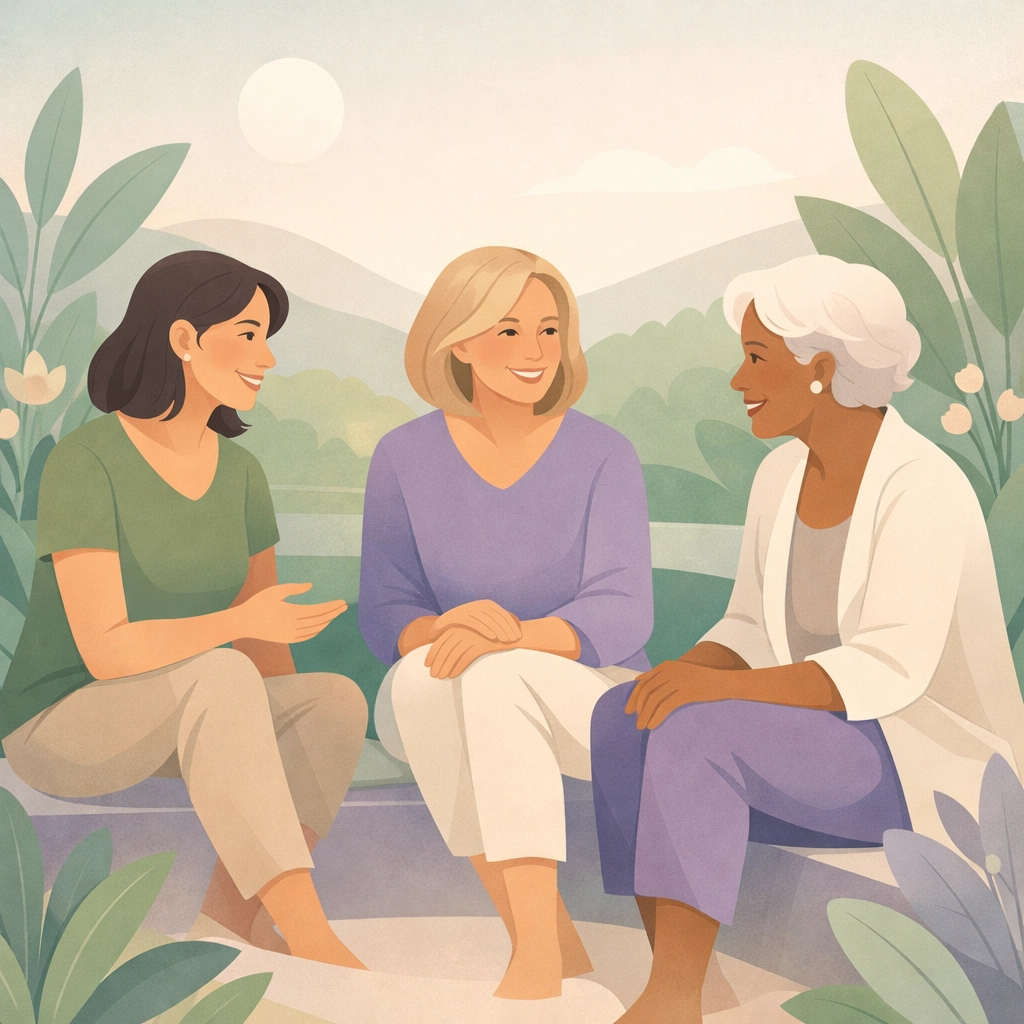
If history has taught us anything, it’s that we cannot do this alone. The "wise women" of the past knew that community was the antidote to stigma. When we talk openly about our experiences, the shame evaporates.
Today, that community looks like online forums, workplace support groups, and evidence-based classes. Whether you are looking for FAQs about symptoms or seeking a deeper understanding of treatment options, the goal is the same: to move from a place of isolation to a place of shared power.

Rewriting Your Own History
As we celebrate Women’s History Month, I want you to look in the mirror and recognize the history you are making in your own life. You are the descendant of women who navigated this transition in the dark, without Google, without HR policies, and without Hormone Replacement Therapy.
You carry their resilience in your DNA. But unlike them, you don't have to be silent.
How to step into your power today:
- Educate yourself: Don't rely on myths or "old wives' tales." Look for evidence-based resources that explain the science behind your body.
- Talk about it: Tell your partner, your friends, and your colleagues. Normalizing the conversation is a revolutionary act.
- Practice self-compassion: Remember that your value is not tied to your reproductive status. You are entering your "wise woman" era.
Frequently Asked Questions
Why was menopause ignored for so long in history?
Because history was largely written by men who defined a woman’s value by her ability to bear children. Once a woman reached menopause, she was often considered "socially dead" or irrelevant to the historical narrative.
What is the "Grandmother Hypothesis"?
It’s an evolutionary theory that suggests women live long past their reproductive years because their presence and wisdom significantly increase the survival rates of their grandchildren and the success of their communities.
How can I find support today?
Start by browsing our post sitemap for articles on everything from nutrition to mental health. You can also join a community or class at the Menopause Education Center.
A Call to Action
History isn’t just something that happened 200 years ago. History is happening right now. Every time you advocate for yourself at the doctor’s office, every time you mentor a younger woman, and every time you refuse to be ashamed of your body, you are rewriting the narrative.
Let’s honor the women of the past by being the loudest, most informed, and most empowered generation of menopausal women the world has ever seen.
Are you ready to join the revolution? Check out our latest classes and resources and let’s make history together.
Sources:
- Journal of Women’s Health: Resilience and Well-being in Perimenopause (2023).
- The Menopause Revolution: Advocacy and Workplace Change.
- The Grandmother Hypothesis and the Evolution of Human Longevity.
- Historical Perspectives on Menopause and Social Stigma (Research Archive).